
We’ve all heard it said, from parents, grandparents, and probably countless episodes of The Waltons or Little House On The Prairie…
“A man’s word is his bond.”
There was a time, not too long ago, in which honesty was valued, commended, and expected. Here was some thoughts about honesty from some people more famous than I am…
Honesty is the first chapter in the book of wisdom. ~ Thomas Jefferson
No legacy is so rich as honesty. ~ William Shakespeare
The high road is always respected.
Honesty and integrity are always rewarded. ~ Scott Hamilton
 Dishonesty has been around since the Garden of Eden. Original sin was the result of dishonesty and deception, when the serpent enticed Eve to partake of the forbidden fruit. Since then, men have cajoled and connived their way through history. And while there was a time in the not-too-distant past when honesty was put up on a pedestal as the “golden standard” by which we should live, society began to take a much more cynical view of this virtue…
All men profess honesty as long as they can. To believe all men honest would be folly. To believe none so is something worse.~ John Quincy Adams
The most important thing in acting is honesty.
If you can fake that, you’ve got it made. ~ George Burns
In his song Honesty, singer/songwriter Billy Joel made this appeal…
But I don’t want some pretty face
To tell me pretty lies.
All I want is someone to believe.
 Someone to believe. We all desire to be spoken the truth.Whether it is a doctor giving us a diagnosis, a politician making campaign promises, or a child explaining how the expensive vase ended up on the floor in a thousand pieces, we all want people to be straight with us. The fact is, however, that we have become accustomed to much less. In politics, lies and “back-room deals” have become expected, and we have grown too complacent to alter the modus operandi. On television, we see dishonesty given a pass — even glorified — as long as it serves some noble purpose, whether on a sitcom or the nightly news. As a pastor, I cannot tell you how many marriages and families I have seen torn apart because of dishonesty and deception.
So what does God’s Word have to say about honesty and truth?
In Psalms 15:1-2, the psalmist writes…
Lord, who may abide in Your tabernacle?
Who may dwell in Your holy hill?
He who walks uprightly,
And works righteousness,
And speaks the truth in his heart…
In 1 John 5:20, we find that truth is a very attribute of who God is…
And we know that the Son of God has come and has given us an understanding, that we may know Him who is true; and we are in Him who is true, in His Son Jesus Christ. This is the true God and eternal life.
After David’s sin with Bathsheba, as he repented in Psalm 51, he says this in verse 6…
Behold, You desire truth in the inward parts,
And in the hidden part You will make me to know wisdom.
In John 4:23-24, Jesus tells us what true worship looks like…
But the hour is coming, and now is, when the true worshipers will worship the Father in spirit and truth; for the Father is seeking such to worship Him. God is Spirit, and those who worship Him must worship in spirit and truth.
Throughout Scripture, God puts a pretty high value on truth.
So why should we settle for less in our lives, homes, churches, communities, and government?
 I would contend that we are not too far gone. I would argue that we are not beyond expecting truth — regardless of how painful — from those around us. Getting back to a place of truth and honesty might be painful for a season, but once we you get there with God’s help, and make that your expectation, you will be amazed at the freedom that accompanies truth. As the saying goes… “The truth will set you free!”
So friend, I encourage you… get back to the truth. Live it. Walk in it. Operate in it. Find the freedom that is yours in Christ through living a life as He did… in truth.
I leave you with a quote by the late Zig Ziglar…
Honesty and integrity are absolutely essential for success in life – all areas of life. The really good news is that anyone can develop both honesty and integrity.
 On June 6, 1944, the success of Operation Overlord (what we commonly refer to as D-Day) can be largely attributed to the fact that personnel and equipment were where they were supposed to be, when they were supposed to be there.
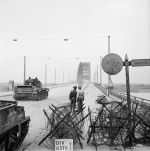 Conversely, the failure of Operation Market Garden (famously depicted in the movie A Bridge Too Far) just three months later can be blamed, in large part, on the inability to get men and supplies where they needed to be in order to support troop movements and actions. Although Operation Market Garden was actually a larger operation, it failed to meet it’s objective and expedite the end World War II.
 This would imply that David, as king and leader of the army, should have been with his army, Instead, he decided to hang back, and relax in the confines of his palace in Jerusalem. While there was not necessarily anything inherently wrong with being where he was (in his palace), by not being in his proper place, it allowed him to fall into temptation, and subsequently sin with Bathsheba. Not being where he was supposed to be opened the door for sin, and changed the destinies of Uriah the Hittite, Bathsheba, David himself, and an entire nation.
 Maybe there is nothing inherently wrong with where you are… it’s just not where you are supposed to be. For me, as a burned-out Southern Baptist preacher in 1989, a perfectly acceptable place for me to be would have been at home with my family. However, where I was supposed to be was in Glorietta, New Mexico. Being there, and my subsequent encounter with the Holy Spirit as a result, changed my future, my ministry, and my life.
 We have now in America what is referred to as The Bystander Effect. This “psychological phenomenon” was brought to light on March 16, 1964 when a young woman named Catherine “Kitty” Genovese was brutally stabbed to death while walking to her apartment at Kew Gardens in Queens, New York City. A man named Winston Moseley had decided he was going to kill a woman that day, and it didn’t matter who it was. Driving around, Moseley spotted Genovese, and followed her to a parking lot. He got out of his car, and when she began to flee, he quickly caught up to her, and began stabbing her. As Genovese screamed, “Oh my God, he stabbed me! Help me!“, Moseley continued his attack. Amid her cries for help, a neighbor eventually yelled out of his window, “Let that girl alone!“, at which point Moseley fled the scene of the crime. Lying wounded and dying, not one of the estimated three dozen+ people who either heard her cries or saw the attack came to help Genovese. After ten minutes of lying there wounded, her attacker returned, and continued to stab, rape, and rob Genovese. By the time Moseley left, and help finally arrived, it was too late. Twenty-eight-year-old Kitty Genovese took her last breath en route to the hospital.
 Is His sacrifice nothing to you?

 The 2015 movie Bridge of Spies tells the true story of James Donovan, an American lawyer who was tasked with defending a Soviet spy during the height of the Cold War. After being given the unenviable assignment of unsuccessfully defending Soviet spy Rudolf Abel (real name: Vilyam Genrikhovich Fisher) after his capture by U.S. authorities in 1957, the tenacious Mr. Donovan continued with appeals, eventually arguing his client’s case before the Supreme Court (which ruled against him in a 5-4 decision). Although his arguments did not sway the courts, he did manage to see one decision go in his favor…
 Four years after his defeat in court, Mr. Donovan and Mr. Abel were once again reunited on the Glienicke Bridge when Abel was traded to the Soviets for downed American U-2 pilot Francis Gary Powers. Not only that, but at about that same time at Checkpoint Charlie, American student Frederic Pryor, who had been held without charge by the East Germans, was being released as well.
 It is pretty apparent that we live in a world of extremes…
 Recently at our church, our young people performed the great musical The Sound of Music. It is the classic story of the von Trapp family’s escape from Nazism in Austria after Germany usurped Austria into the German empire in 1938 — an event known as the Anschluss.
 The National Socialist German Worker’s Party (ie: the Nazi Party) rose to power following Germany’s defeat in World War I. The Nazis played upon the discontent of the people in attacking big business and capitalism, and used class-warfare as a tool to further its popularity by establishing a culture of entitlement and ideological superiority. Racism was also a key element in the spread of this toxic ideology, and resulted in the Holocaust… the death of six million Jews.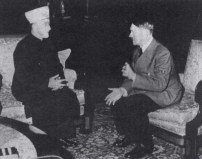
 The Heart of Abba - Ron Phillips