
A while back, I saw the story of a man who was discussing his childhood. He revealed the fact that he had been brought up in a family that attended church fairly regularly. As this boy grew older, he became inquisitive about things of faith, the Bible, and the concept of God. His inquiries took a darker tone of skepticism, and he challenged the belief system being taught at his church. I would love to say that the leadership of that church reached out to him, and tried to guide him in a path to faith. According to his account, that was not what happened…
The adult leaders in the church sent him home, and asked his parents not to bring him back. This man is now a very outspoken atheist who mocks the existence of God, the accounts of the Bible, and the idea of faith.
Such a sad story. As a pastor for nearly five decades, I wish I could say that this story was an isolated incident. I wish I could say that such things happen so seldom that it can merely be defined as an anomaly. It’s just not the case.
The fact is that this story is repeated all too often, and often with much more tragic results. We all have a desire to belong, but for the formative years of adolescence, this time is critical in developing peer groups, self-worth, and core belief systems. Children gravitate to acceptance. The desire to be loved and accepted can never be discounted or marginalized. For everyone, that desire looks a little different. In schools, the outlet to fit in takes the form of clubs, special interest groups and elective classes such as music, art, etc. In schools and rec leagues, young people participate in sports because of mutual interests, camaraderie, and the desire to be a part of a team. We all want to belong.
The church has something for everyone, and all are accepted. Unfortunately, oftentimes our actions don’t bear out this fact. Sometimes, we don’t reach out to everyone the way we should. Sometimes, people fall through the cracks. Sometimes, someone leaves the church and their absence goes — for weeks — unnoticed. Sometimes we categorize people based on social standing, stereotype, or limited perception, and never take the time to find out who the person inside really is.
I have a friend who spent many of his school years in Christian schools. He once told me that some of the kids who acted out the most, and were the ones most often in trouble, were the preachers’ kids. Sometimes, the ones who we think should be the examples of obedience and Godliness are the ones struggling the most with acceptance and trying to deal with the unrealistic expectations of others. I know the struggles my own children faced being “preacher’s kids”. There is no “yellow brick road” of ease promised to any of us, regardless of our lot in life. Our struggles may look different, but they are struggles nonetheless. Anyone from any strata of society can be “The One”.
So how do we deal with it? In the end, does God put those we helped in one column, and those we lost in another, and if the gains outnumber the losses, we’re ok in His eyes? Is our success ratio the golden standard? Do we write off “acceptable losses”, and pat ourselves on the back for the majority we kept in the fold?
 Not according to the Bible. In Luke 15, Jesus tells us a story…
Then all the tax collectors and the sinners drew near to Him to hear Him. And the Pharisees and scribes complained, saying, “This Man receives sinners and eats with them.” So He spoke this parable to them, saying:
“What man of you, having a hundred sheep, if he loses one of them, does not leave the ninety-nine in the wilderness, and go after the one which is lost until he finds it? And when he has found it, he lays it on his shoulders, rejoicing. And when he comes home, he calls together his friends and neighbors, saying to them, ‘Rejoice with me, for I have found my sheep which was lost!’ I say to you that likewise there will be more joy in heaven over one sinner who repents than over ninety-nine just persons who need no repentance.
To the Good Shepherd, all of his sheep were of equal importance. To him, there was not an acceptable win/loss ratio. To him, getting back the one was just as important as staying put with the ninety-nine, and making sure they were ok. For many of us, we would focus and feel good about the ninety-nine we saved. To the Good Shepherd, however, his focus was on the one… any loss was unacceptable.
In the movie Schindler’s List, Oskar Schindler is saying goodbye to the Jews he saved. The Jews had made him a gold ring. On it was an inscription from the Talmud that read, “Whoever saves one life saves the world entire.” As Schindler begins to speak, he breaks down in tears…
Oskar Schindler: I could have got more out. I could have got more. I don’t know. If I’d just… I could have got more.
Itzhak Stern: Oskar, there are eleven hundred people who are alive because of you. Look at them.
Schindler: If I’d made more money… I threw away so much money. You have no idea. If I’d just…
Stern: There will be generations because of what you did.
Schindler: I didn’t do enough!
Stern: You did so much.
Schindler: This car. Goeth would have bought this car. Why did I keep the car? Ten people right there. Ten people. Ten more people.
Schindler: This pin (referring to Nazi party pin). Two people. This is gold. Two more people. He would have given me two for it, at least one. He would have given me one. One more… One more person. A person, Stern. For this… I could have gotten one more person… and I didn’t! And I… I didn’t! (breaks down sobbing)
 Friend, when was the last time you mourned for the lost? When was the last time your heart broke for those emotionally wounded and bleeding souls who came across your path — possibly through the doors of your church — and left untouched and unchanged? For the Good Shepherd, his reaction was immediate. He didn’t wait until it was convenient. He didn’t wait until he had gotten the ninety-nine to the safety of a barn or pen; the Bible says that he left the ninety-nine in the wilderness, and went after the one. I think the Good Shepherd understood that time was of the essence, and saving the one depended upon his deliberate and swift action.
So who is the one for you? Who is the one that God has put in your path that needs a friend, an advocate, or a Saviour? We may say, “The mistake people make is judging Jesus by His followers.” That is true. However, as His followers, it doesn’t let us off the hook of trying to be like Him, and love people the way He does.
Look around you today.
Identify The One.
Go after them. Laugh with them. Cry with them. Listen to them. Talk to them. Make a difference in their life.
Blessings,
Pastor Ron
 I’m tired of the LGBT agenda that is being forced upon the American people. Understand me when I say that I don’t believe that anyone should be threatened, abused, or discriminated against because of their lifestyle. However, I do not believe that churches should have to hire someone that promotes a lifestyle contrary to our biblical world view, or be forced to affirm perversion as a “civil right”. While members of the LGBT community should not be oppressed or mistreated, neither should those of us who believe that their lifestyle is a sin be forced to agree with their choices. If you can’t “legislate morality from the (court) bench”, you shouldn’t be able to legislate immorality either.
 I’m tired of we, the American taxpayers, being robbed to support leftist causes and wasteful governmental agencies. It infuriates me to see our tax dollars go to failed and failing “green” companies (remember Solyndra) and other “pet
 I’m tired of Islamic terrorists being called moderates. When I was young and growing up in the South, there was a religious organization that committed acts of terror in the name of God. They were called the Ku Klux Klan. Yet, the church rose up against them and said, “You’re not Christian… You’re wrong.” It’s time for any moderate Muslims to rise up, call these terrorists for what they are, and affirm the right for Israel to exist in peace.
 I am still proud when I hear the sound of our National Anthem being sung at a sporting event.
 Dishonesty has been around since the Garden of Eden.
  Someone to believe. We all desire to be spoken the truth.Whether it is a doctor giving us a diagnosis, a politician making campaign promises, or a child explaining how the expensive vase ended up on the floor in a thousand pieces, we all want people to be straight with us. The fact is, however, that we have become accustomed to much less. In politics, lies and “back-room deals” have become expected, and we have grown too complacent to alter the modus operandi. On television, we see dishonesty given a pass — even glorified — as long as it serves some noble purpose, whether on a sitcom or the nightly news. As a pastor, I cannot tell you how many marriages and families I have seen torn apart because of dishonesty and deception.
 I would contend that we are not too far gone. I would argue that we are not beyond expecting truth — regardless of how painful — from those around us. Getting back to a place of truth and honesty might be painful for a season, but once we you get there with God’s help, and make that your expectation, you will be amazed at the freedom that accompanies truth. As the saying goes… “The truth will set you free!”
 On June 6, 1944, the success of Operation Overlord (what we commonly refer to as D-Day) can be largely attributed to the fact that personnel and equipment were where they were supposed to be, when they were supposed to be there.
 Conversely, the failure of Operation Market Garden (famously depicted in the movie A Bridge Too Far) just three months later can be blamed, in large part, on the inability to get men and supplies where they needed to be in order to support troop movements and actions. Although Operation Market Garden was actually a larger operation, it failed to meet it’s objective and expedite the end World War II.
 This would imply that David, as king and leader of the army, should have been with his army, Instead, he decided to hang back, and relax in the confines of his palace in Jerusalem. While there was not necessarily anything inherently wrong with being where he was (in his palace), by not being in his proper place, it allowed him to fall into temptation, and subsequently sin with Bathsheba. Not being where he was supposed to be opened the door for sin, and changed the destinies of Uriah the Hittite, Bathsheba, David himself, and an entire nation.
 Maybe there is nothing inherently wrong with where you are… it’s just not where you are supposed to be. For me, as a burned-out Southern Baptist preacher in 1989, a perfectly acceptable place for me to be would have been at home with my family. However, where I was supposed to be was in Glorietta, New Mexico. Being there, and my subsequent encounter with the Holy Spirit as a result, changed my future, my ministry, and my life.
 We have now in America what is referred to as The Bystander Effect. This “psychological phenomenon” was brought to light on March 16, 1964 when a young woman named Catherine “Kitty” Genovese was brutally stabbed to death while walking to her apartment at Kew Gardens in Queens, New York City. A man named Winston Moseley had decided he was going to kill a woman that day, and it didn’t matter who it was. Driving around, Moseley spotted Genovese, and followed her to a parking lot. He got out of his car, and when she began to flee, he quickly caught up to her, and began stabbing her. As Genovese screamed, “Oh my God, he stabbed me! Help me!“, Moseley continued his attack. Amid her cries for help, a neighbor eventually yelled out of his window, “Let that girl alone!“, at which point Moseley fled the scene of the crime. Lying wounded and dying, not one of the estimated three dozen+ people who either heard her cries or saw the attack came to help Genovese. After ten minutes of lying there wounded, her attacker returned, and continued to stab, rape, and rob Genovese. By the time Moseley left, and help finally arrived, it was too late. Twenty-eight-year-old Kitty Genovese took her last breath en route to the hospital.
 Is His sacrifice nothing to you?
 It is pretty apparent that we live in a world of extremes…
 Recently at our church, our young people performed the great musical The Sound of Music. It is the classic story of the von Trapp family’s escape from Nazism in Austria after Germany usurped Austria into the German empire in 1938 — an event known as the Anschluss.
 The National Socialist German Worker’s Party (ie: the Nazi Party) rose to power following Germany’s defeat in World War I. The Nazis played upon the discontent of the people in attacking big business and capitalism, and used class-warfare as a tool to further its popularity by establishing a culture of entitlement and ideological superiority. Racism was also a key element in the spread of this toxic ideology, and resulted in the Holocaust… the death of six million Jews.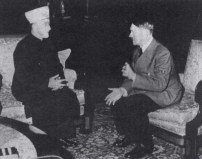
 That’s right, folks. Election Year! Placards wallpapering the roadside, political television and radio spots with the flip of every channel, unbridled rhetoric filling the walls and news feeds of Facebook and Twitter. We seem to have about every conceivable viewpoint, every imaginable ideology, and every possible position covered. We all have in our minds the perfect candidate; the one that we agree with on 99.9999% of the issues important to our nation. And while the Democratic side of the nation has far fewer candidates to choose from than the Republican side, it would seem that just about every possible ideology is represented.
 The reality of the situation, particularly on the conservative side of things, is that we are looking for someone who does not exist: The perfect candidate. We want to believe that we agree with a certain candidate about everything when we really don’t because he (or she) is “our guy”. We want to not agree with a certain candidate because they are not “our guy”. The fact of the matter is that there is not really that much that separates most of the candidates on either side. Most Republicans agree on most issues. Most Democrats agree on most issues.
 #3. Vote. Abraham Lincoln once said, “He has a right to criticize who has a heart to help.” As much as I hate to say this, sometimes voting is not about picking the person who will do the most good. Sometimes, it is about picking the person who will do the least harm. Sometimes, neither candidate is ideal. Sometimes, you may feel like you are just choosing between the lesser of two evils. However, by choosing not to vote, you have voted — you chose not to support the candidate who had the best chance of success.
 To see an abundant harvest, it takes obedience, patience, persistence, and faith. It takes sowing seed into fertile ground that is going to receive that seed, and allow it to spread its roots and grow. It takes faithfulness as a sower, and faith in the ONE who will give the increase, Whose word will never return void, but will accomplish what He has said.
 The Heart of Abba - Ron Phillips