 We have now in America what is referred to as The Bystander Effect. This “psychological phenomenon” was brought to light on March 16, 1964 when a young woman named Catherine “Kitty” Genovese was brutally stabbed to death while walking to her apartment at Kew Gardens in Queens, New York City. A man named Winston Moseley had decided he was going to kill a woman that day, and it didn’t matter who it was. Driving around, Moseley spotted Genovese, and followed her to a parking lot. He got out of his car, and when she began to flee, he quickly caught up to her, and began stabbing her. As Genovese screamed, “Oh my God, he stabbed me! Help me!“, Moseley continued his attack. Amid her cries for help, a neighbor eventually yelled out of his window, “Let that girl alone!“, at which point Moseley fled the scene of the crime. Lying wounded and dying, not one of the estimated three dozen+ people who either heard her cries or saw the attack came to help Genovese. After ten minutes of lying there wounded, her attacker returned, and continued to stab, rape, and rob Genovese. By the time Moseley left, and help finally arrived, it was too late. Twenty-eight-year-old Kitty Genovese took her last breath en route to the hospital.
Was her life nothing to those that heard her cries
and did nothing in those early morning hours?
Wikipedia describes the Bystander Effect as…
“… a social psychological phenomenon that refers to cases in which individuals do not offer any means of help to a victim when other people are present. The probability of help is inversely related to the number of bystanders. In other words, the greater the number of bystanders, the less likely it is that any one of them will help.”
There once was a man who walked the dusty roads of the Middle East. He was kind, compassionate, and full of wisdom. Crowds large and small gathered to hear him speak, and his words brought life and hope to those who heard. However, regardless of the words he spoke, kindness he showed, and good deeds he did, the “Establishment” hated him. He rocked the boat of their belief system, upset the apple-cart of their status-quo, and for that — they deemed — he was worthy of death. Accusations were brought, false witnesses told lies, a friend betrayed him, he was given a mockery of a trial, and sentenced to die.
But death wasn’t good enough. The Establishment needed to make an example out of him, if for no other reason, to discourage copy-cat rabble-rousers.
They began by striking him and mocking him. They blindfolded him, hit him, and made sport of his captivity. Since this cruelty wasn’t enough to elicit a response, they ramped up the abuse. He was tied to a post and whipped 39 times with a device designed to tear the flesh from his body; nine strips of leather, embedded with broken pottery, bone, metal, and any other sharp edge that would help accomplish its goal. This “scourge” was raised by the muscled arm of a soldier who showed a knack for inflicting the most pain and damage, and 39 times it fell with the ferocity of a pack of wild dogs descending upon its victim.
When he survived that unimaginable beating, the rest of his sentence of death could be carried out. The “electric chair” of that day was called a cross — a heavy beam of lumber with a cross beam. The victim would be nailed to it, forced to hang naked before the world, dying from his wounds, exposure, and asphyxiation. To add insult to injury, the soldiers tasked with his execution forced him to carry his own instrument of death through the dusty streets, being mocked, spit upon, and humiliated along the way. At one point, when he finally collapsed for the last time under its weight, the soldiers accompanying him pulled a man from the crowd, forcing him to carry the load the rest of the way to the spot of execution.
Upon arrival at a place known by the locals as “The Place of the Skull“, his cross was dropped onto the ground, and he was forced on top of it. Spreading his arms out on the cross-beam, massive spikes were driven through each wrist, with one being driven through his overlapped feet. Once it was certain he was secure, they raised the cross and dropped it into a hole in the ground, the velocity of his body weight jerking hard against the spikes.
And for six hours, Jesus hung between Heaven and Earth… and died… for you.
 Is His sacrifice nothing to you?
If you could cure AIDS, wouldn’t you want everyone to know it? If you could stop cancer, would you keep quiet? If you had the method to put an end to Alheimer’s, would you keep silent?
If you are a believer in Christ, you have a testimony.
As one saved by Jesus’ precious blood, you have an amazing story to tell.
As a Christian, you have the incredible witness of a Gospel that
transforms lives… and it is criminal to keep it to yourself.
Are the lives of those around you who are dying — lost without Jesus — nothing to you?
In a YouTube video, illusionist, comedian, and renowned atheist Penn Jillette had this to say about Christians who share their faith…
And I’ve always said, you know, that I don’t respect people that don’t proselytize. I don’t respect that at all. If you believe that there’s a Heaven and Hell, and people could be going to Hell — or not getting eternal life, or whatever — and you think that, “Well, it’s not really worth tellin’ ’em this, because it would make it socially awkward”, and atheists who think that people shouldn’t proselytize, “Just leave me alone. Keep your religion to yourself”… How much do you have to hate somebody to not proselytize? How much do you have to hate somebody to believe that everlasting life is possible and not tell them that? I mean, if I believe, beyond a shadow of a doubt, that a truck was coming at you and you didn’t believe it —that truck was bearing down on you — there’s a certain point where I tackle you, and this is more important than that.
At Easter, we celebrate the resurrection of Jesus Christ, and His triumph over death, Hell, and the grave! What better time to introduce a friend to the risen Savior that can save their soul, and transform their life. Christian, it is time to get serious about our witness. It is not enough to be a bystander, watching the masses pass by — beating a path to Hell — and waiting for someone else to tell them of Jesus’ love. He has called YOU. You are the one to tell His story. You are the one they are waiting for.
Is it nothing to you?
Maybe not… but it is EVERYTHING to them.

 The 2015 movie Bridge of Spies tells the true story of James Donovan, an American lawyer who was tasked with defending a Soviet spy during the height of the Cold War. After being given the unenviable assignment of unsuccessfully defending Soviet spy Rudolf Abel (real name: Vilyam Genrikhovich Fisher) after his capture by U.S. authorities in 1957, the tenacious Mr. Donovan continued with appeals, eventually arguing his client’s case before the Supreme Court (which ruled against him in a 5-4 decision). Although his arguments did not sway the courts, he did manage to see one decision go in his favor…
 Four years after his defeat in court, Mr. Donovan and Mr. Abel were once again reunited on the Glienicke Bridge when Abel was traded to the Soviets for downed American U-2 pilot Francis Gary Powers. Not only that, but at about that same time at Checkpoint Charlie, American student Frederic Pryor, who had been held without charge by the East Germans, was being released as well.
 It is pretty apparent that we live in a world of extremes…
 Recently at our church, our young people performed the great musical The Sound of Music. It is the classic story of the von Trapp family’s escape from Nazism in Austria after Germany usurped Austria into the German empire in 1938 — an event known as the Anschluss.
 The National Socialist German Worker’s Party (ie: the Nazi Party) rose to power following Germany’s defeat in World War I. The Nazis played upon the discontent of the people in attacking big business and capitalism, and used class-warfare as a tool to further its popularity by establishing a culture of entitlement and ideological superiority. Racism was also a key element in the spread of this toxic ideology, and resulted in the Holocaust… the death of six million Jews.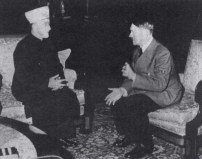
 That’s right, folks. Election Year! Placards wallpapering the roadside, political television and radio spots with the flip of every channel, unbridled rhetoric filling the walls and news feeds of Facebook and Twitter. We seem to have about every conceivable viewpoint, every imaginable ideology, and every possible position covered. We all have in our minds the perfect candidate; the one that we agree with on 99.9999% of the issues important to our nation. And while the Democratic side of the nation has far fewer candidates to choose from than the Republican side, it would seem that just about every possible ideology is represented.
 The reality of the situation, particularly on the conservative side of things, is that we are looking for someone who does not exist: The perfect candidate. We want to believe that we agree with a certain candidate about everything when we really don’t because he (or she) is “our guy”. We want to not agree with a certain candidate because they are not “our guy”. The fact of the matter is that there is not really that much that separates most of the candidates on either side. Most Republicans agree on most issues. Most Democrats agree on most issues.
 #3. Vote. Abraham Lincoln once said, “He has a right to criticize who has a heart to help.” As much as I hate to say this, sometimes voting is not about picking the person who will do the most good. Sometimes, it is about picking the person who will do the least harm. Sometimes, neither candidate is ideal. Sometimes, you may feel like you are just choosing between the lesser of two evils. However, by choosing not to vote, you have voted — you chose not to support the candidate who had the best chance of success.
 To see an abundant harvest, it takes obedience, patience, persistence, and faith. It takes sowing seed into fertile ground that is going to receive that seed, and allow it to spread its roots and grow. It takes faithfulness as a sower, and faith in the ONE who will give the increase, Whose word will never return void, but will accomplish what He has said.
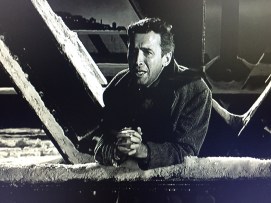
 No matter how many times we view it, it seems that every year, viewing the Frank Capra/Jimmy Stewart classic is as much a tradition of the season of Christmas as decking the halls, drinking egg nog, or wearing ugly sweaters. No matter how many times we see the image of George Bailey running down the snow-filled streets of Bedford Falls, screaming to people, buildings, and other inanimate objects, it gives us hope to know that George will discover the deeper meaning of Christmas, that he will learn a lot about friendship and the love people have for him, that his life does matter, and that Clarence does get his wings.
 “So what are you saying Pastor??? Are you saying that we should crack down on George Bailey, Santa Claus, Frosty, and Rudolph???”
 Honestly, we would do well to rediscover the ability to laugh at ourselves. Proverbs 17:22 says that a merry heart does good, like a medicine… But when the offense is legitimate or grave, we should probably step back, take a long look at the situation and our motives, and ask if our offense is better fought through confrontation or prayer.
 From wonderful, timeless classics like A Christmas Carol (Alastair Sim), White Christmas, Miracle on 34th Street, and It’s A Wonderful Life, to animated favorites like Frosty the Snowman, Rudolph the Red-Nosed Reindeer, and A Charlie Brown Christmas, these Christmas movies bring back memories of long-ago, transporting us to other places and innocent times. Add to these more recent films such as The Santa Clause series, A Christmas Story, and Elf, and you’ll either be crying tears of nostalgia or laughing tears of joy.
 As I have often alluded to in my blog, truth comes from odd sources with unlikely messengers. This time of year, that very truth is more obvious than ever, starting over 2,000 years ago with a group of shepherds as the unlikeliest of messengers — sharing the news that the angels proclaimed, and the witness of what they had seen with their own eyes.
 The Heart of Abba - Ron Phillips